Key Takeaways
- Passive building design dramatically lowers long-term utility costs and increases property value by reducing reliance on mechanical heating and cooling systems.
- Strategic building orientation, facade innovation, and natural ventilation are crucial for multi-residential projects in tropical climates.
- Advanced tools like computational fluid dynamics (CFD) modelling are necessary to validate and refine passive building design strategies, achieving strong thermal performance even in dense urban environments.
- Embracing these strategies early is essential for future-proofing assets against rising energy prices and stricter compliance requirements.
Introduction
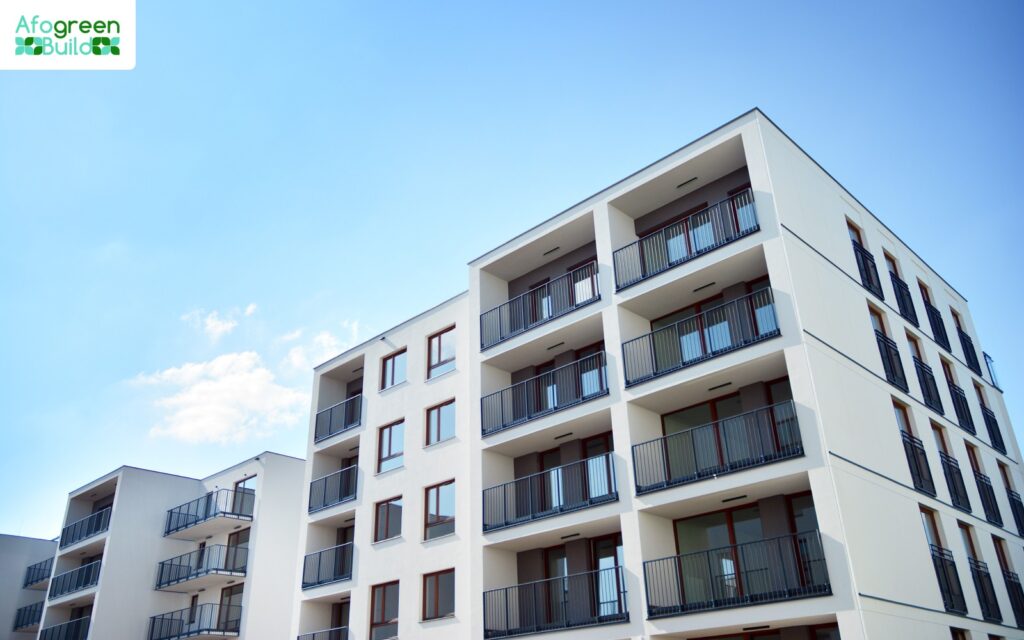
As cities grow and sustainability standards become more rigorous, developers of multi-residential projects are increasingly expected to create buildings that deliver performance, comfort, and long-term value. Passive building design plays a crucial role in achieving this balance, transforming how we approach sustainability in dense urban environments.
Why Does Passive Building Design Matter?
Conventional design approaches rely heavily on mechanical cooling and heating systems to maintain comfort. In contrast, passive buildings incorporate an energy-efficient design that utilises the building’s form, orientation, materials, and envelope to maintain comfort with minimal energy use.
For developers and property owners, the benefits are both environmental and economic:
- Reduced energy consumption and operational costs, achieved through smarter design that lowers the need for mechanical conditioning.
- Enhanced asset value and market appeal, as sustainability continues to influence buyer and tenant preferences.
- Better indoor comfort and air quality, supporting occupant well-being and long-term satisfaction.
- Futureproof compliance with evolving standards, including energy benchmarks and BASIX certification requirements, which assess water, energy, and thermal performance. This supports residential developments in meeting sustainability targets and operating efficiently in a low-carbon economy.
Integrating passive design principles early in the planning process establishes a foundation for high-performance buildings that cost less to run and align with long-term sustainability goals. Engaging a qualified BASIX consultant also helps each project meet water, energy, and thermal performance benchmarks, supporting compliance and enhancing overall building efficiency.
Key Strategies for Mid- to High-Rise Multi-Residential Buildings
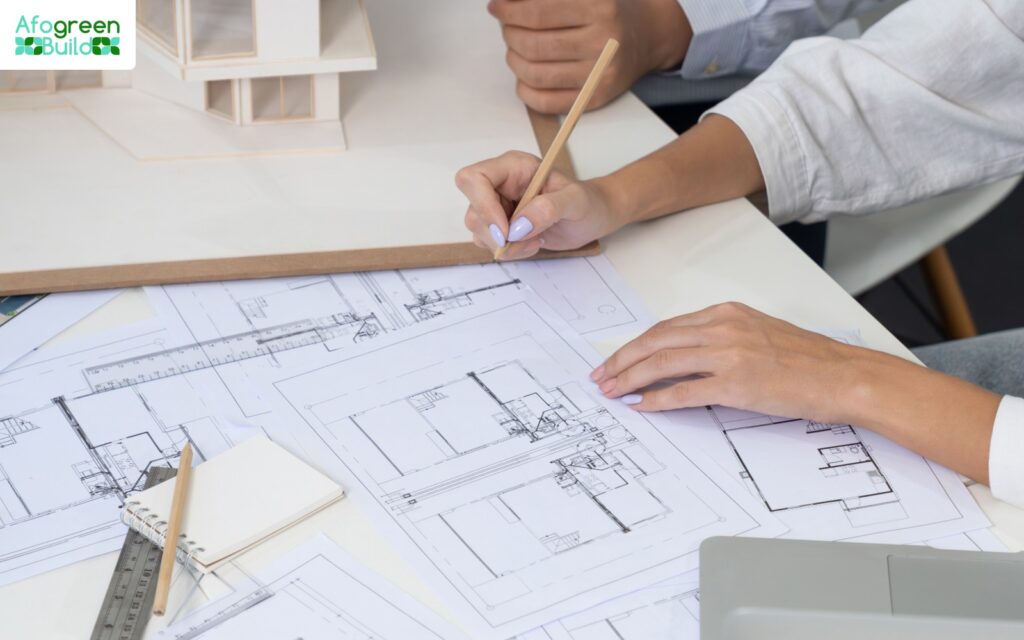
Implementing passive building design in larger residential properties requires a nuanced approach, one that considers urban density, building height, and occupant load. Here are strategies tailored to the multi-residential context.
1. Building Orientation and Massing
The objective is to harness the sun’s warmth during cooler months while preventing overheating in summer, all without compromising natural ventilation.
Key Passive Heating Strategies:
- Position private open spaces to the north, with adequate separation from neighbouring buildings, so that winter sunlight can reach these areas without obstruction.
- Locate living areas along the northern side and connect them to these open spaces. Incorporating thermal mass in these areas helps retain heat during cooler periods. Ideally, living spaces should be oriented within 15° west to 20° east of true (solar) north.
- Install windows facing north, northeast, or northwest to capture low-angle winter sunlight and maximise natural warmth.
- Reduce window openings on south, southeast, and southwest façades to limit heat loss and improve overall energy performance.
Key Passive Cooling Strategies:
- Design a narrow, elongated, or articulated building form to encourage cross-ventilation and reduce heat buildup.
- Limit the size and number of windows on the east, west, and northwest façades, where solar heat gain is strongest.
- Avoid west-facing bedrooms to promote better sleeping comfort during the hottest part of the afternoon.
- Locate utility areas, such as laundries, bathrooms, and garages, on the south or west side wherever possible, and place less-used spaces in the warmest zones of the building.
2. Window Design and Glazing Performance
Well-planned glazing, framing, and shading systems can significantly reduce heating and cooling demands while maintaining indoor comfort, daylighting quality, and long-term performance.
Passive Heating Considerations:
- Select glazing and frame systems with low U-values to reduce heat loss.
- Opt for glass with a higher Solar Heat Gain Coefficient (SHGC) to capture useful winter warmth. However, do note that this may increase cooling needs in summer.
- Use adjustable shading to allow winter sunlight to enter.
- Raise shading devices or lower sill heights to prevent permanent shading across upper glazing.
- Reduce overhang depths when more winter sun is needed, keeping in mind that cooling demand may increase.
- Avoid placing windows in areas that are shaded for most of the day.
Passive Cooling Considerations:
- Specify glazing and frames with low U-values to reduce conducted heat gain.
- Increase shading using deeper overhangs, external louvres, or awnings, acknowledging that this may raise heating requirements.
- Select glass with a lower SHGC to limit solar heat entering in summer.
Additional Performance Factors to Consider:
- Use glass with appropriate Visible Light Transmittance (VLT) to provide natural daylight with minimal glare and consider low emissivity (low-e) coatings.
- Prioritise external shading devices over tinted glazing to maintain winter heat gain.
- Incorporate operable windows to promote natural ventilation where wind conditions allow.
- Improve air tightness by choosing well-sealed windows; awning and casement windows generally outperform sliding types.
Other Climate-Specific Considerations:
- Warmer Climates (e.g., Darwin, northern Queensland): SHGC is more important than U-value. Use low SHGC glazing with adequate shading. North-facing windows may use slightly higher SHGC if shaded. East, south, and west glazing should use deep shading or very low SHGC glass.
- Temperate Zones (e.g., Sydney, Perth, Adelaide): North-facing windows should have high SHGC with shading designed to block summer sun and admit winter light. East and west glazing needs deeper or adjustable shading. SHGC is less critical for south-facing glazing.
- Cool Climates (e.g., Melbourne, Hobart, Canberra): U-value dominates performance due to heat loss. High SHGC glazing on the north can provide daytime warmth but may be limited by surrounding shading.
3. Ventilation and Airflow Management
Ventilation is another crucial aspect of passive building design, influencing comfort, indoor air quality, and moisture control by promoting airflow while limiting unwanted drafts.
Strategies for Passive Heating and Ventilation Control:
- Install weatherstripping and draught seals on external doors.
- Use door systems that close automatically in windy conditions, or fit spring closers to limit drafts.
- Design upper levels so they can be closed off when needed, helping retain warmth in winter and reducing heat transfer in summer.
- Place bedrooms on upper floors in cooler climates where rising warm air can improve comfort.
- Avoid open railings on stairwells, balconies, and voids, as they allow cool air to flow into living spaces and create discomfort.
- Reduce the size and number of windows on upper levels to minimise heat loss.
Strategies for Passive Cooling and Breeze Management:
- Include high-level windows so hot air can escape while cooler air enters through lower openings.
- Position windows on opposite sides of the dwelling to support effective cross-ventilation.
- Use landscaping elements to direct cooling breezes toward key openings during summer.
- Place trees or screens strategically to shield the building from cold winter winds.
4. Thermal Insulation and Energy Efficiency
Good insulation helps maintain indoor comfort and reduces energy use for heating and cooling. Here are some passive building design strategies to enhance performance:
- Install bulk insulation in ceilings, walls, and floors, making sure it remains uncompressed and protected from moisture.
- Add reflective insulation in roofs and walls, which is especially useful in hot climates.
- Place ceiling insulation between joists for improved thermal resistance.
- Combine multiple insulation types to achieve higher R-values where needed for maximum energy efficiency.
5. Ceiling Fans, Thermal Bridging, and Thermal Mass
Ceiling fans provide cost-effective comfort by improving air movement. In NCC Climate Zone 5, at least one ceiling fan is required in daytime habitable areas such as living rooms. Other zones (2, 4, 6, 7, and 8) treat ceiling fans as optional in living areas and bedrooms.
For Roofs and Ceilings:
- Increase the insulation R-value by at least 0.5 for non-metallic frames
- Add a continuous insulation layer with a minimum R-value of 0.13 above or below the framing.
- Stack two layers of insulation to meet BASIX requirements.
- Ensure that the top layer is at least R0.5 and covers the joists or trusses.
For External Walls:
- Install reflective insulation to create a 20 mm air gap behind the cladding.
- Increase wall insulation by R0.5 in line with BASIX requirements
- Add a continuous insulation layer (minimum R0.30) on either side of the frame.
- Metal-framed walls should also include a thermal break with an R-value of at least R0.2 between the cladding and the frame.
For Suspended Floors:
- Increase insulation between floor framing or use continuous insulation above or below framing to reach BASIX R-values.
Thermal mass supports these passive building design strategies by helping stabilise indoor temperatures, particularly in climates with large day-to-night temperature swings. It performs best when placed in northern living areas near north-facing windows, where it can absorb and store warmth. Effective shading should be planned so that winter sunlight can heat the thermal mass, while direct summer sun is blocked to prevent overheating.
6. Shading and Solar Control
Use adjustable shading to block summer sun yet admit winter sunlight because BASIX assumes shading is used in summer and retracted in winter to permit solar gain.
Passive Heating Strategies:
- Use adjustable shading to block summer sun yet admit winter sunlight. BASIX modelling assumes shading is retracted in winter.
- Pair shading with clear glazing instead of tinted options to maximise winter heat gain.
- Avoid excessive shading that limits winter solar access.
Passive Cooling Strategies:
- Apply shading strategies suited to each facade orientation.
- Increase shading depth or coverage where solar exposure is highest.
For north-facing facades, simple horizontal projections like eaves provide effective seasonal shading. East, west, and south facades benefit from verandahs, pergolas, external louvres, awnings, or vertical blinds for stronger solar control.
7. Thermal Comfort and Ventilation Validation
When it comes to complex, tall structures, performance cannot rely on assumptions alone. Computational Fluid Dynamics (CFD) modelling plays a crucial role in validating design intent.
By simulating airflow, temperature distribution, and pressure differentials, building CFD modelling helps architects and engineers fine-tune the placement of vents, windows, and vertical shafts for optimal ventilation. This level of analysis enables passive building designs to function effectively under real-world conditions, meeting comfort benchmarks while avoiding over-engineered mechanical systems.
The Path Forward with Afogreen Build
Passive building design is more than a sustainability initiative, it’s a long-term investment in performance, comfort, and resilience. By integrating passive principles from the outset, developers can create high-performance buildings that consume less energy, offer better living environments, and retain long-term market value.
At Afogreen Build, our experienced ESD consultants help translate design intent into measurable sustainability outcomes. From early-stage planning to certification support, we guide multi-residential projects in achieving meaningful environmental, social, and economic results. Partner with us to create buildings that perform efficiently, enhance live ability, and sustain long-term value for both people and the planet.
Contact us today.
Disclaimer: Please note that the information provided in this article is for general guidance only. Project teams should review and verify all requirements according to their specific project conditions and applicable regulations. Afogreen Build is not liable for any decisions or actions taken based solely on the information presented here.